
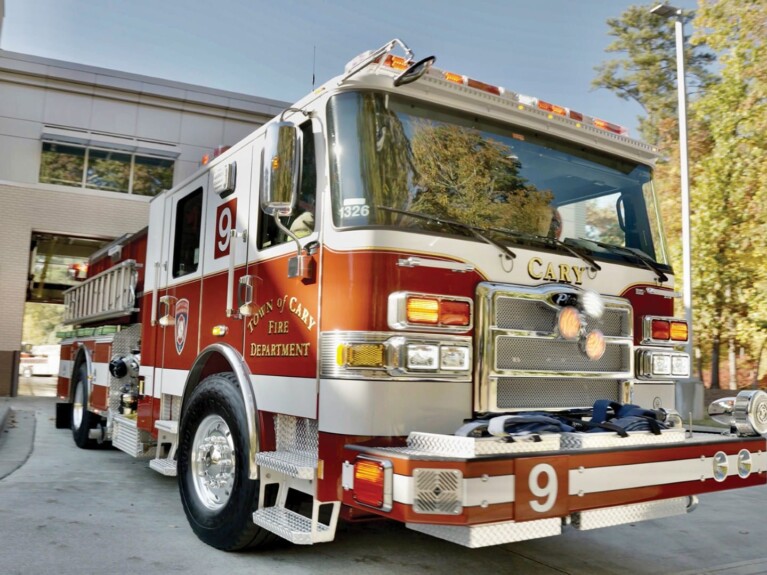
When Cary, North Carolina, committed to electrifying its fleet (750 vehicles within 1,450 fleet assets), the goal was to make a practical, people-first investment in cleaner air, operational resilience, and long-term cost efficiency. That vision came to life with the deployment of the East Coast’s first electric fire truck in 2025.

The companies that support NAFA’s 100 Best Fleets work alongside high-performing fleet organizations every day, giving them a unique perspective on what separates the best from the rest. We asked this year’s sponsors what they consistently see in top-performing fleets, where fleets can make meaningful improvements now, and what will distinguish the industry’s leaders in the years ahead.

For fleet managers, tires are far more than a maintenance expense. They are one of the costliest consumables in daily operations. Every route, load, driver habit, inflation decision, and rotation schedule affects how long a tire lasts, how safely it performs, and how much value the fleet extracts from each mile.

Many fleets are keeping vehicles in service longer than originally planned. Whether driven by tighter capital budgets, rising vehicle costs, supply chain disruptions, or replacement delays, aging vehicles have become a reality across municipal, commercial, utility, and vocational fleets.

Making it onto NAFA’s 100 Best Fleets in the Americas list is one of the most prestigious honors in the industry. Similarly, individuals who achieve their CAFM designation are considered the top achievers among fleet professionals. So what happens when you combine a team of CAFMs with a 100 Best fleet? Jeffrey A. Hawthorne, CAFM, Stephen Dewey, CAFM, and Griselda “Millie” Perez, CAFM, from the Palm Beach County Sheriff’s Office share how CAFM training helped their fleet earn the #2 spot on the 100 Best Fleets of 2026.

Fleet managers have spent years talking about the technician shortage, but Sean Carson believes the industry may be diagnosing the wrong problem.

For Barry Budhu, speeding was the top priority. Manager of transportation, utilities and fleet services for King Township, a Canadian municipality in Ontario, his fleet vehicles carry the municipal logo through residential streets and school zones every day. For a public fleet under constant community scrutiny, Budhu wanted to move the safety needle — and he wanted drivers to take ownership of moving it themselves.

The current Congress in June of 2025 used the Congressional Review Act (CRA) to rescind or overturn three previously issued waivers to federal Clean Air Act requirements that allowed California to implement more rigorous requirements. President Trump subsequently signed those CRA actions into law. This was a novel application for the CRA, which had previously been used only to rescind new regulatory programs, not actions under existing programs like waivers.

When Congress considers major transportation, infrastructure, energy, and economic-development legislation, fleet operators often find themselves asking an important question: Where does the fleet perspective fit into the conversation?

NAFA Fleet Management Association announced its 2026 Class of NAFA Fellows, recognizing five outstanding professionals whose leadership, service, and contributions have made a significant impact on NAFA and the fleet management profession.