

Running a fleet management team is like creating your favorite dish, and the key to making that food you like the most is the ingredients. Those elements, and how they are handled during the cooking process, are essential.
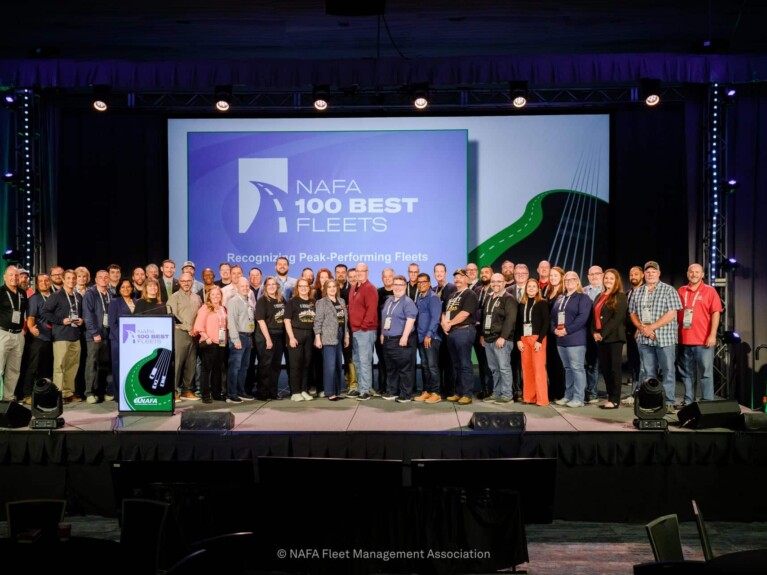
The 100 Best Public and Commercial fleets from the Americas was a robust competition that proved the industry’s top organizations outperformed previous years. The awards, announced during NAFA’s I&E conference last month in Cleveland, showcased the leaders and teams representing the best of the best.
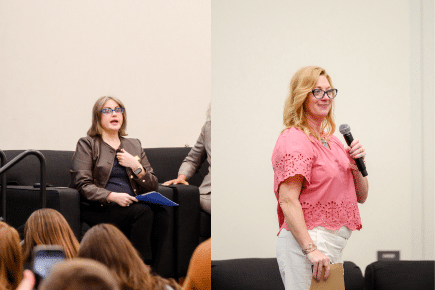
A Women in Fleet panel discussion during NAFA’s recent I&E event in Cleveland, Ohio, had a clear message: Female leaders in the fleet industry must be intentional about amplifying their voices.
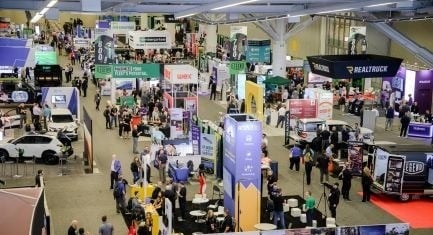
Education, technology, and networking topped the priority list for 2,200 fleet professionals who converged on Cleveland, Ohio, last week (April 13–15) for NAFA’s annual I&E. Widely known as the fleet event of the year, I&E 2026 posted its largest attendance in nearly a decade and featured a sold-out Expo Hall.
As fleet professionals navigate accelerating regulatory change, rapid technology advancement, and increasing pressure to modernize operations, education and collaboration have never been more critical. ACT Expo is expanding its partnership with NAFA Fleet Management Association in 2026 to bring practical, credit-eligible training to NAFA’s April event while deepening the value NAFA members will experience at ACT Expo in May.

Fleetio’s Brianna Perry shares some practical advice on integrating AI into your everyday fleet operations.

By leveraging high-integrity, real-world data, Geotab’s Bob Bradley says fleets can use AI to eliminate manual coordination and surface accurate, actionable insights in seconds. In 2026 the fleet industry has reached a tipping point where data is no longer just for reporting, but the fuel for business survival. Bob Bradley, who manages the data science team at Geotab, says his company is at the center of this transformation, processing 100 billion data points daily from 5.8 million connected vehicle subscriptions to move fleets from a reactive “monitor and respond” model to one of predictive, automated insights.

Global business leaders have labelled Duncan Stevens one of the most exciting and inspiring high-performance leadership and collaboration conference speakers today. Stevens will present a motivational keynote at NAFA’s I&E on Wednesday, April 15, 2026, during the General Session beginning at 8:30 a.m. at the Huntington Convention Center of Cleveland in Ohio. At his core, Stevens is a high-performance coach…

Tom Johnson was the visionary behind NAFA’s 100 Best Fleets in the Americas and Green Fleet Award contests, which continue to elevate fleet best practices across the profession. To honor his lifelong service and leadership, NAFA established the Tom Johnson Award in 2025 to recognize individuals whose careers reflect sustained commitment, mentorship, and industry advancement.

Stephen Drum, a combat-tested retired Navy SEAL master chief with 27 years of experience leading and developing high-performance teams, will open NAFA’s annual I&E with his keynote: “Life on the X — Learn How to Meet Any Challenge with Courage, Confidence, and Readiness!” Drum will translate the Navy’s elite Warrior Toughness methodology into actionable strategies for the modern business world.