
The Most Overlooked Asset in Fleet Management
By Anthony Casale
Ask most fleet managers how they plan for vehicle replacement, and you’ll get a confident answer: lifecycles, replacement cycles, budget projections. Ask how they plan to replace the lifts those vehicles sit on, and you’ll usually get a pause.
Shop equipment is the most overlooked asset class in municipal fleet management. Lifts, A/C machines, tire changers, compressors, and alignment equipment make maintenance possible, yet they rarely appear in a replacement plan, a PM schedule, or an inspection log. Published guidance on this is hard to find. Most of what exists covers lift safety or vehicle replacement — not the equipment that services the vehicles.
Here’s why it matters:
- Safety and liability. A vehicle lift is among the most dangerous pieces of equipment in a shop. ANSI/ALI ALOIM calls for an annual inspection by a qualified individual. Without documentation, you can’t show due diligence after an incident.
- Budget predictability. Unplanned equipment replacement lands on a budget that is not prepared to absorb it. A planned replacement is a line item.
- Uptime. One down lift or tire machine slows every vehicle in the queue, including public safety units that can’t wait.
- Compliance. Lifts, compressors, and refrigerant machines carry inspection or certification requirements that are easy to miss without a tracking system.
Why We Did It When We Did
From 2024–2026 we conducted a multi-year effort that coincided with the complete renovation of our light-duty repair facility. New and upgraded equipment was going into the building, which made it the right time to ask a bigger question: When will each piece need to be replaced, and how will we pay for it?
Here’s what we did:
- Inventoried everything. We documented 27 pieces of shop equipment: 16 vehicle lifts (14 two-post and 2 heavy-duty 30,000-pound drive-on lifts), 1 alignment machine, 5 air compressors, 2 A/C machines, and 3 tire and wheel machines with each piece receiving its own asset tag.
- Set budgeted lifecycles by equipment type. Lifts and the alignment machine are on seven-year cycles, compressors six-year, A/C machines five-year, and tire and wheel equipment four to five. These are planning intervals, not expiration dates. At each interval equipment is evaluated on condition, inspection results, and repair history, then replaced or re-justified. Every piece has a date where someone must decide.
- Built a 10-year plan with inflation. Costs carry a 3% inflation factor, so out-year numbers are budget-ready.
- Loaded everything into the FMIS as asset records with their own history, costs, and downtime.
- Assigned PM schedules that generate work orders automatically instead of living in someone’s head.
- Scheduled third-party inspections. Especially for lifts, yearly certified inspections with due dates and documentation attached.
A Plan That Grows
The plan didn’t arrive complete. Early versions carried only a handful of line items, such as an older wheel lift, A/C testers, a metal forming machine, and two vehicle lifts. Each subsequent budget cycle added more. Today it runs about 29 lines, with new compressors, an EV fast charger, and gate motors added in the latest cycle.
If you’re starting from nothing, start small. The plan gets better every year you maintain it.
Smoothing the Budget
Our light-duty lifts are a mix of older units and recent purchases, so replacements are staggered at two per year. That keeps the lift program at roughly $43,000–$52,000 annually instead of one painful year. The 10-year plan totals about $1.39 million, with annual spending ranging from about $72,000–$233,000.
As fleet professionals, we know that nothing upsets a budget coordinator more than when unplanned expenses arise mid-year. When we as fleet professionals can provide a stable and long-term plan, it completely changes the conversation around budgeting necessary expenses.
Single Points of Failure
Our heavy-duty lifts are the only way to service our largest apparatus. If one goes down, an ambulance or similar unit has no good alternative. That’s a public safety readiness risk, and it belongs on a replacement plan.
Getting Started
You don’t need a big project. Start with lifts since they carry the most risk. Build the inventory, pick realistic lifecycles, stagger the schedule, and add everything to your FMIS. Everything else follows the same pattern.
Fleet professionals are trained to think about the vehicle. This is about managing everything that keeps vehicle maintenance running.

Anthony Casale is fleet manager for the City of Ft. Lauderdale, Florida.
Related Articles

As the entitlement partner for the Labor Day NASCAR O’Reilly Auto Parts Series Race at Darlington Raceway, Fleetio CMO Leslie Henthorn talks about why the partnership makes sense and what fleets can learn from it.
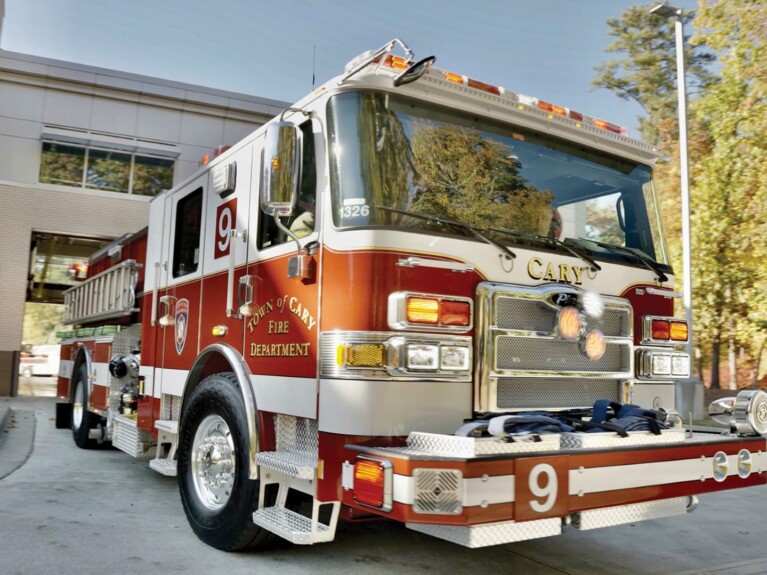
When Cary, North Carolina, committed to electrifying its fleet (750 vehicles within 1,450 fleet assets), the goal was to make a practical, people-first investment in cleaner air, operational resilience, and long-term cost efficiency. That vision came to life with the deployment of the East Coast’s first electric fire truck in 2025.

The companies that support NAFA’s 100 Best Fleets work alongside high-performing fleet organizations every day, giving them a unique perspective on what separates the best from the rest. We asked this year’s sponsors what they consistently see in top-performing fleets, where fleets can make meaningful improvements now, and what will distinguish the industry’s leaders in the years ahead.